|
|
“Crisfield Strong: Clean Your Chimney, Prevent the Fire" |
| By CVFD | |
| August 23, 2026 | |
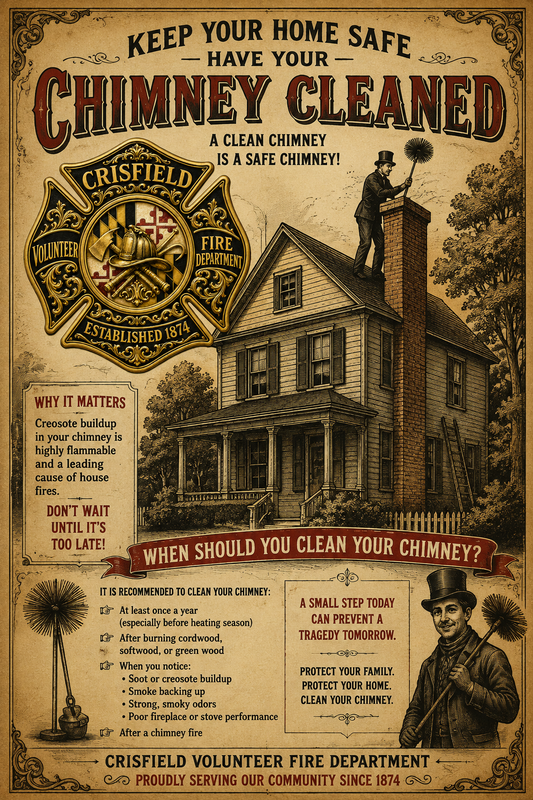
| Although temperatures remain warm for now, cooler weather is approaching. Homeowners who heat their homes with wood should schedule an annual chimney inspection and cleaning. This important step helps reduce the risk of house fires. Chimney and flue-related fires make up a smaller portion of overall house fires, but they continue to present a significant danger. Each year, U.S. fire departments respond to more than 18,000 home structure fires that involve chimneys, flues, or fireplaces. Some organizations report the annual number can reach as high as 25,000, with most incidents occurring in December, January, and February. Confined chimney fires, which stay within the flue, account for about 74 to 87 percent of these cases. Annual cleaning and inspection are essential to preventing this type of fire. The National Fire Protection Association (NFPA) and the Chimney Safety Institute of America (CSIA) both recommend yearly chimney cleaning, regardless of how often the fireplace is used. This standard helps prevent dangerous buildup of creosote and ensures proper ventilation. The majority of households should arrange for a professional chimney cleaning once each year, ideally in the fall before heating season begins. Chimneys used frequently—more than 30 fires per season—those burning unseasoned wood, or those showing soot and creosote residue should be cleaned twice annually, both before and after the heating season. Homes burning three or more cords of wood weekly may require cleaning every six months. How often cleaning is needed depends on factors like fireplace use and the type of wood burned. Wood-burning chimneys typically produce more creosote than gas or oil systems. However, even gas chimneys need yearly inspection. Softwoods such as pine and spruce create more creosote than hardwoods like oak and hickory, and burning green or wet wood accelerates buildup. Using only dry, seasoned wood is recommended. Chimney design and location may also affect how quickly buildup develops. Immediate chimney cleaning is necessary if there are creosote deposits thicker than one-eighth inch, a persistent smoky odor, visible soot or debris in the firebox or chimney, or smoke or creosote detected in the flue when the fireplace is not in use. In summary, chimneys should be cleaned at least once per year and more frequently if usage is high or if unseasoned wood is burned. Regular professional cleaning helps prevent chimney fires and ensures fireplaces operate safely throughout the heating season
|
|
|
|