


| 2026 Incidents | |
| Jan | 17 |
| Feb | 13 |
| Mar | 12 |
| Apr | 17 |
| May | 21 |
| Jun | 16 |
| Jul | 25 |
| Aug | 18 |
| Sep | 19 |
| Oct | 10 |
| Nov | 0 |
| Dec | 0 |
| Total | 168 |
Since
May 21, 2026
Oct 12, 2026
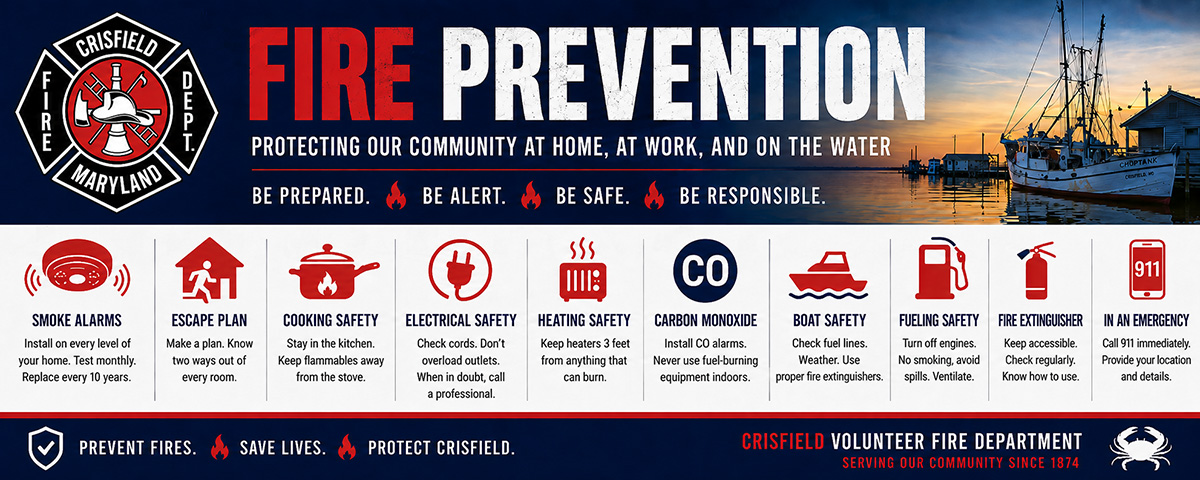
Protecting Our Community at Home, at Work, and on the Water
The Crisfield Volunteer Fire Department is committed to helping residents, businesses, and visitors reduce the risk of fire and injury through education, prevention, and preparedness. Fire prevention starts long before an emergency occurs. Simple steps such as maintaining smoke alarms, practicing escape plans, using heating equipment safely, and being prepared on the water can make a life-saving difference.
As a waterfront community, Crisfield faces many of the same fire risks found in homes and businesses, along with additional hazards related to boats, marinas, docks, and fuel systems. Whether you live here year-round, visit seasonally, operate a vessel, or enjoy time near the water, fire safety is everyone’s responsibility.

Smoke Alarms Save Lives
Working smoke alarms provide early warning during a fire and give you and your family more time to escape.
Residents are encouraged to:
- Install smoke alarms inside every sleeping area, outside each sleeping area, and on every level of the home.
- Test smoke alarms at least once a month.
- Replace batteries as needed, unless the alarm has a sealed long-life battery.
- Replace smoke alarms that are more than 10 years old.
- Make sure everyone in the home knows what the alarm sounds like and what to do when it activates.
Never ignore a sounding smoke alarm. Get out immediately and call 911 from a safe location.
Create and Practice a Home Escape Plan
Every household should have a fire escape plan. During a fire, smoke can spread quickly and visibility may be limited.
Your escape plan should include:
- Two ways out of every room, when possible.
- A designated meeting place outside and away from the home.
- A plan for helping children, older adults, or anyone with mobility needs.
- Practice drills with all household members.
- Instructions to never go back inside once you are out.
Close doors behind you as you leave to help slow the spread of fire and smoke.
Cooking Safety
Cooking is one of the leading causes of home fires. Stay alert and remain in the kitchen when cooking.
Safety reminders:
- Keep towels, paper products, packaging, and other combustibles away from the stove.
- Turn pot handles inward to prevent spills.
- Keep children and pets away from cooking areas.
- Never leave frying, grilling, or broiling unattended.
- Keep a lid nearby to smother small grease fires.
If a fire occurs in the oven or microwave, turn the appliance off, keep the door closed, and call 911 if the fire does not go out quickly.
Heating Safety
During colder months, heating equipment can create serious fire hazards if not used properly.
To reduce your risk:
- Keep anything that can burn at least three feet away from heaters, fireplaces, wood stoves, and furnaces.
- Use space heaters only on a flat, stable surface.
- Plug space heaters directly into wall outlets, never into extension cords or power strips.
- Turn off portable heaters before leaving the room or going to sleep.
- Have chimneys, fireplaces, and heating systems inspected and cleaned regularly.
- Use only the proper fuel for fuel-burning heaters.
Electrical Safety
Electrical problems can lead to fires inside homes, businesses, garages, sheds, and marine environments.
Practice electrical safety by:
- Replacing damaged or frayed cords.
- Avoiding overloaded outlets and extension cords.
- Using extension cords only as temporary solutions.
- Keeping electrical cords away from rugs, doors, and high-traffic areas.
- Calling a qualified electrician if lights flicker, breakers trip frequently, or outlets feel warm.
- Using outdoor-rated cords and equipment when working outside.
Carbon Monoxide Safety
Carbon monoxide is an odorless, colorless gas that can be deadly. It can come from fuel-burning appliances, generators, vehicles, grills, fireplaces, and boats.
Important safety steps:
- Install carbon monoxide alarms outside sleeping areas and on every level of the home.
- Never use grills, generators, or fuel-burning equipment inside a home, garage, enclosed porch, or cabin.
- Do not run vehicles or boat engines in enclosed or poorly ventilated areas.
- Leave immediately and call 911 if a carbon monoxide alarm sounds or if anyone experiences symptoms such as headache, dizziness, nausea, weakness, or confusion.
Boat and Marina Fire Safety
As a waterfront community, Crisfield residents and visitors should take extra precautions around boats, docks, fuel systems, and marinas. Fires on the water can spread quickly and may be harder to escape or control.
Before Getting Underway
Before each trip, boaters should:
- Check fuel lines, tanks, fittings, and connections for leaks or damage.
- Inspect electrical wiring and battery connections.
- Make sure fire extinguishers are properly charged, accessible, and approved for marine use.
- Ensure all passengers know where safety equipment is located.
- Run ventilation blowers before starting inboard engines.
- Check for fuel odors before starting the engine.
- Keep the bilge clean and free of fuel, oil, and debris.
If you smell fuel, do not start the engine. Ventilate the area, investigate the source, and correct the issue before operating.
Fueling Safety
Fueling is one of the most hazardous times for boaters.
When fueling:
- Turn off engines, electronics, stoves, and open flames.
- Ask passengers to step off the boat when possible.
- Do not smoke or allow open flames nearby.
- Keep the nozzle in contact with the fuel fill to reduce static buildup.
- Avoid overfilling the tank.
- Wipe up spills immediately.
- Open hatches and run the blower after fueling before starting the engine.
Take your time and remain alert. A small fuel spill can create a serious fire or explosion hazard.
Fire Extinguishers on Boats
Every boater should know how to use a fire extinguisher before an emergency occurs.
Remember the PASS method:
Pull the pin.
Aim at the base of the fire.
Squeeze the handle.
Sweep from side to side.
Fire extinguishers should be mounted where they are easy to reach, inspected regularly, and replaced or serviced when expired, damaged, or discharged.
Dock and Marina Safety
Fires at docks and marinas can involve boats, fuel, electrical systems, and nearby structures.
Help reduce risk by:
- Keeping docks clear of trash, oily rags, and unnecessary combustibles.
- Using only marine-rated electrical connections.
- Avoiding overloaded shore power connections.
- Reporting damaged cords, outlets, or dock electrical equipment.
- Keeping grills and open flames away from boats, fuel areas, and dock structures.
- Knowing the location of fire extinguishers, emergency shutoffs, and exits.
- Calling 911 immediately if you see smoke, fire, or a fuel spill.
Do not attempt to fight a fire unless it is small, you have a clear escape route, and you are trained and comfortable using a fire extinguisher.
Grilling and Outdoor Fire Safety
Outdoor cooking and recreational fires should always be handled with care.
Safety reminders:
- Keep grills away from homes, decks, railings, boats, docks, and overhanging branches.
- Never leave a grill unattended.
- Keep children and pets away from grilling areas.
- Clean grease buildup from grills regularly.
- Dispose of ashes only after they are completely cool.
- Do not place hot ashes in plastic containers, paper bags, or near combustible materials.
Severe Weather and Generator Safety
Storms and power outages can increase fire and carbon monoxide risks.
When using a generator:
- Operate it outdoors only, away from doors, windows, vents, and enclosed spaces.
- Never use a generator inside a home, garage, shed, cabin, or boat cabin.
- Keep generators dry and protected from standing water.
- Use properly rated cords.
- Allow the generator to cool before refueling.
- Install carbon monoxide alarms in your home.
When to Call 911
Call 911 immediately for:
- Smoke or fire in a home, business, boat, vehicle, dock, or marina.
- A smoke alarm or carbon monoxide alarm activation.
- Fuel leaks or strong fuel odors.
- Electrical burning smells or sparking equipment.
- A person trapped, injured, or in danger.
- Any emergency where life, property, or the environment may be at risk.
Provide the dispatcher with your location, the nature of the emergency, and any known hazards. If you are on the water, provide the best location possible, including nearby landmarks, marina name, dock number, GPS location, or direction of travel.

